Exclusive member offers coming soon
|
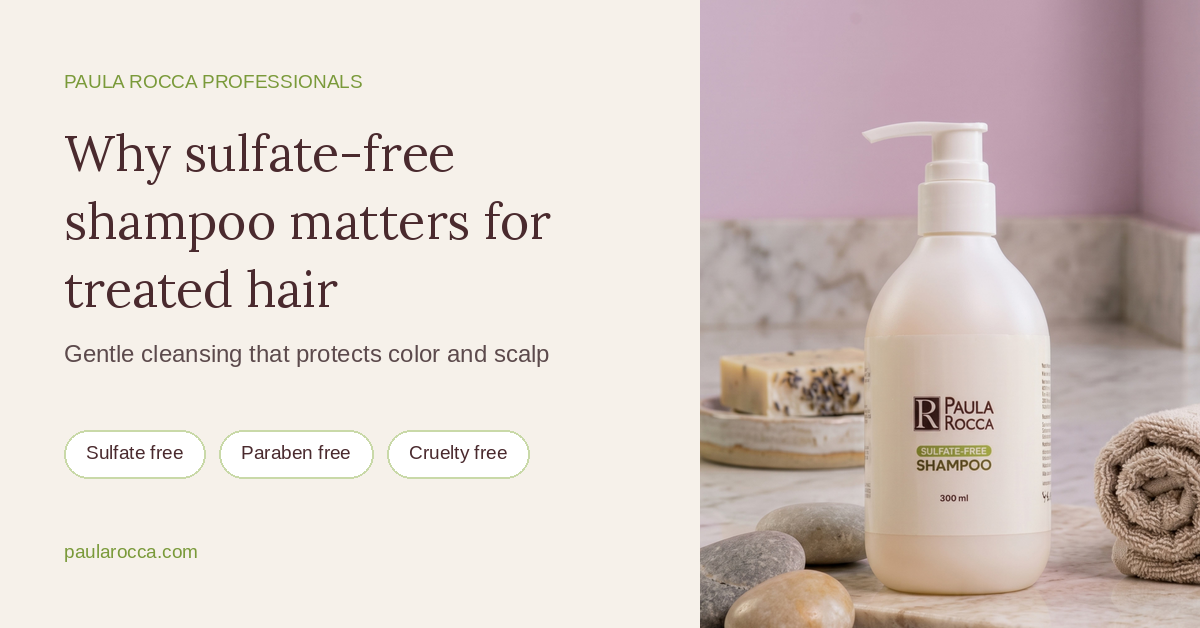
You spent hours in the salon chair and a good amount of money on your color, keratin smoothing, or perm. Then a few washes later, the shine fades, the tone turns dull, and your hair feels dry and brittle. The culprit is often not the treatment itself but what you use to wash it.
The shampoo you choose can decide whether a salon result lasts six weeks or six days. Here is why switching to a sulfate-free formula is one of the simplest and most effective changes you can make.
Coloring, bleaching, relaxing, and smoothing all work by changing the hair's structure. To deposit pigment or alter texture, these services lift the outer cuticle layer, the protective shield that keeps moisture in and damage out.
Even when the work is done skillfully, treated hair is more porous than untouched hair. It absorbs water quickly but loses it just as fast. That is why chemically treated strands often feel rough, tangle easily, and fade faster. Hair in this state needs cleansing that supports the cuticle instead of stripping it further.
Sulfates, most commonly sodium lauryl sulfate and sodium laureth sulfate, are cleansing agents that create the rich, foamy lather many of us associate with "clean." They are effective at removing oil and buildup, but they are not very selective. They lift away the natural oils your scalp produces along with the dirt, and on treated hair they can also pull out color molecules.
Not everyone reacts to sulfates in the same way, but if your hair has been through chemical processing, it has far less tolerance for them.
Sulfate-free shampoos use milder cleansing agents, often derived from coconut or sugar, such as cocamidopropyl betaine or decyl glucoside. These clean the hair without removing every trace of natural oil. They usually produce a softer, creamier lather, which can feel unfamiliar at first. But lather is not a measure of cleanliness. Your hair is just as clean without the foam.
Many modern formulas also include conditioning ingredients like plant oils, proteins, and humectants that help keep moisture in the hair after rinsing.
Longer-lasting color. A gentle cleanser helps the cuticle stay closed so pigment stays where it belongs. If you've invested in a color service, choosing a shampoo for color treated hair is one of the easiest ways to protect it between salon visits.
Better moisture balance. Instead of swinging between stripped and over-conditioned, your hair stays hydrated, which means less breakage and a smoother feel.
A calmer scalp. If your scalp reacts to products easily, a gentle shampoo for sensitive scalp reduces the irritation that harsh detergents can trigger, so your scalp can stay comfortable while your hair stays clean.
Smoother, shinier results. When the cuticle lies flat, hair reflects light better and feels softer to the touch.
A common misconception is that gentle cleansing is only for damaged or dry hair. In reality, a mild shampoo for all hair types can work for fine, thick, wavy, curly, or straight hair. The key is to pair it with the right conditioner and adjust how often you wash based on your scalp's oil production.
Oily scalps may need more frequent washing, while dry or curly hair often does well with fewer washes per week. A gentle hair cleansing shampoo gives you the flexibility to find your own rhythm without worrying about over-stripping.
Chemical services change your hair, so your care routine should change with them. Gentle cleansing helps protect your investment, keeps your scalp comfortable, and gives your hair the softness and shine that make a salon result worth showing off.
If your hair has been colored, lightened, or smoothed, a sulfate-free shampoo is a small swap that can make a noticeable difference. For personalized advice on the right routine for your hair, speak with a professional stylist or explore the haircare range at Paula Rocca.